
18 October 2026
Instant vs. Active Dry Yeast: Key Differences and How to Use Them
Many bakers get confused by the different types of yeast when making dough, as each type requires a slightly different method.
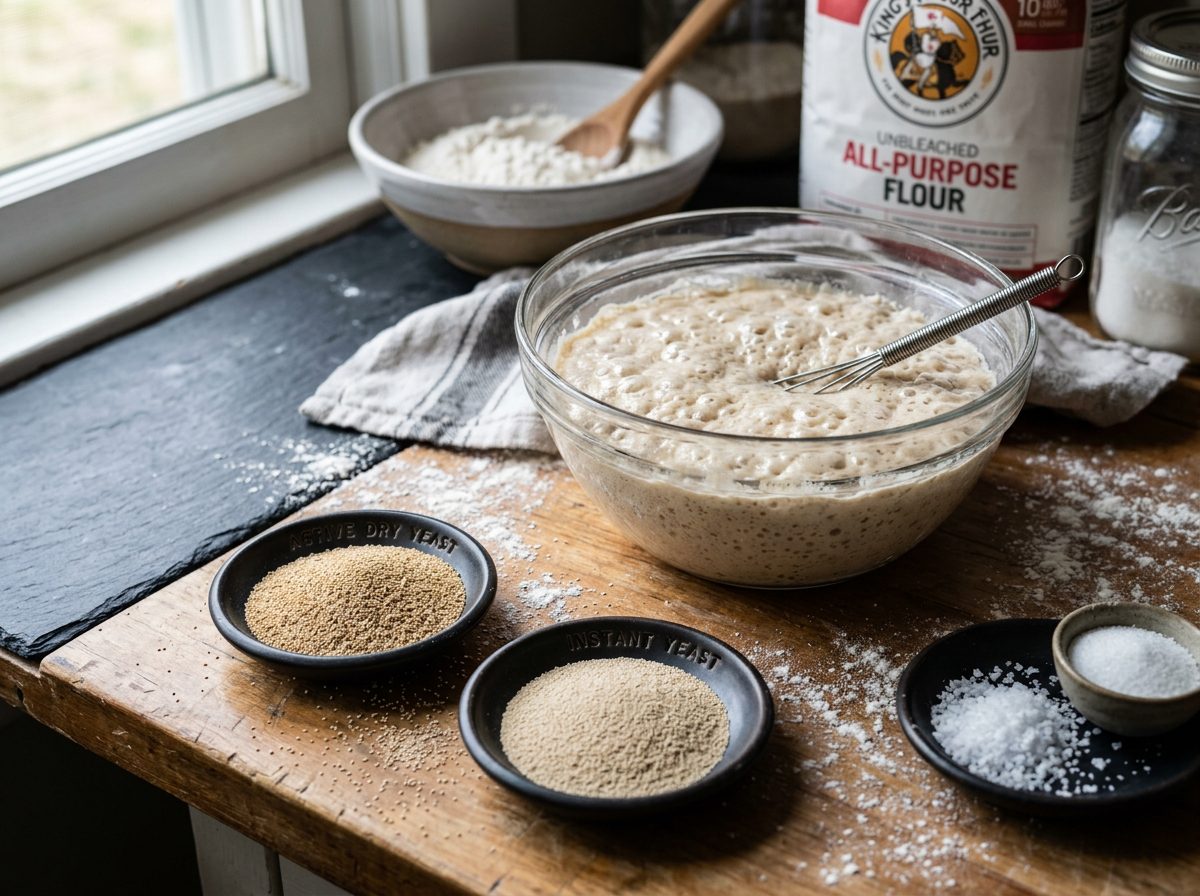
Active Dry Yeast must be activated (proofed) first in warm water with a little sugar before adding it to the flour. This process takes about 10 minutes until you see bubbles and foam on the surface, which indicates that the yeast is alive and working.
Instant Yeast, on the other hand, can be mixed directly into the flour without prior proofing, which saves time. Its granules are also finer and smaller than those of active dry yeast.
If you need to substitute one for the other in a recipe, the general rule of thumb is to use slightly less instant yeast than active dry yeast, as it is more potent.
Most importantly, always ensure your yeast hasn't expired. Old yeast loses its leavening power, which is the primary reason why many homemade bread and pastry recipes fail to rise properly.