
03 October 2026
Ghee vs. Butter vs. Shortening: Which Is Best for Cooking?
Many people confuse ghee, butter, and vegetable shortening, but each plays a distinct role in the kitchen.
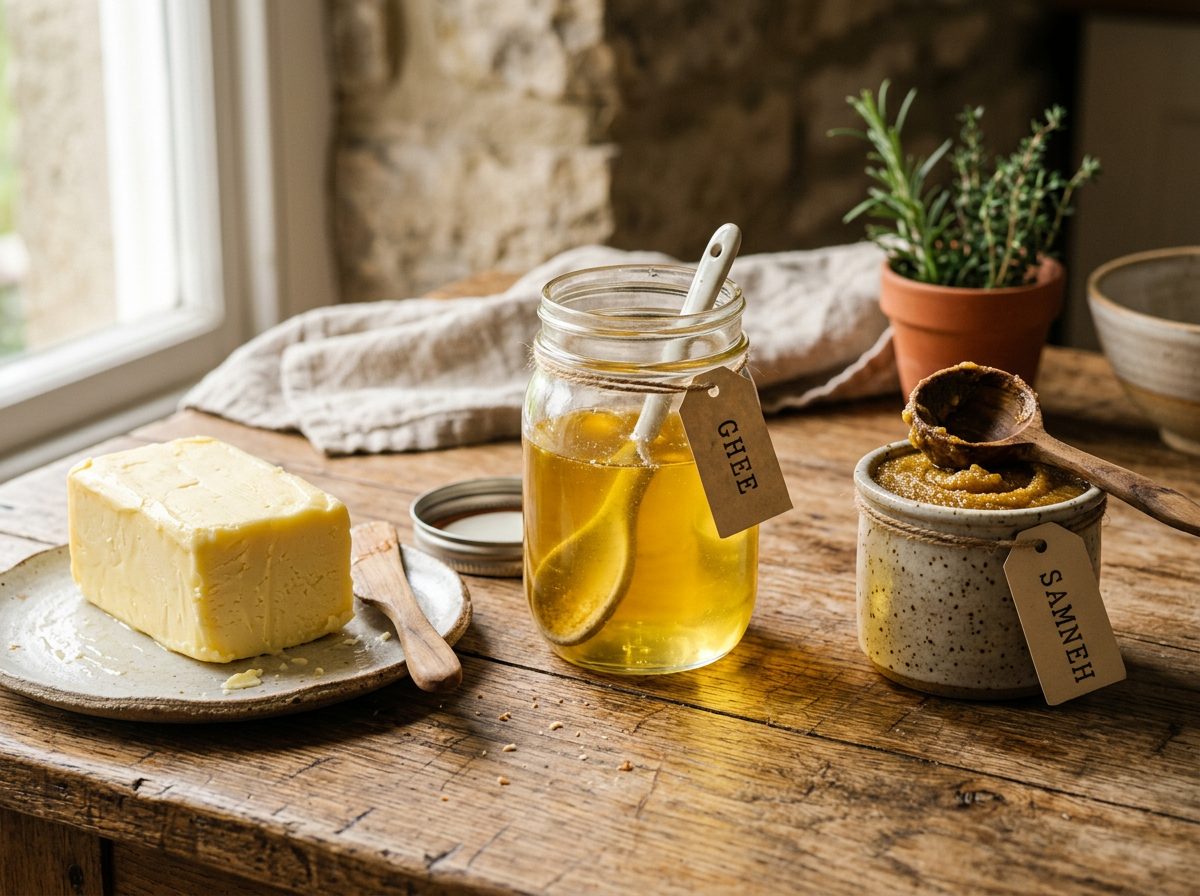
Butter is churned directly from fresh cream and contains both water and milk solids. Because of this, it burns quickly at high temperatures, making it best suited for light sautéing, pan-searing, and baked goods.
Ghee, or traditional samn baladi, is clarified butter cooked down until the water evaporates and the milk proteins are strained out. This gives it a very high smoke point without burning, making it ideal for high-heat cooking, frying, and infusing authentic rich flavor into rice dishes and Mahshi.
Vegetable shortening (vegetable ghee), on the other hand, is a processed alternative made from hydrogenated vegetable oils. While it is much cheaper, its nutritional value and flavor fall far short of pure ghee and natural butter.
If you are looking for authentic, rich flavor in rice dishes, Kabsa, and Mahshi, pure ghee is your best bet. For delicate pastries and light sautéing, real butter remains the top choice.