
05 October 2026
Essential Arabic Spices and Their Culinary Uses
Arabic cuisine is renowned for its rich and diverse use of spices, with each seasoning playing a distinct role in creating its signature flavor profiles.
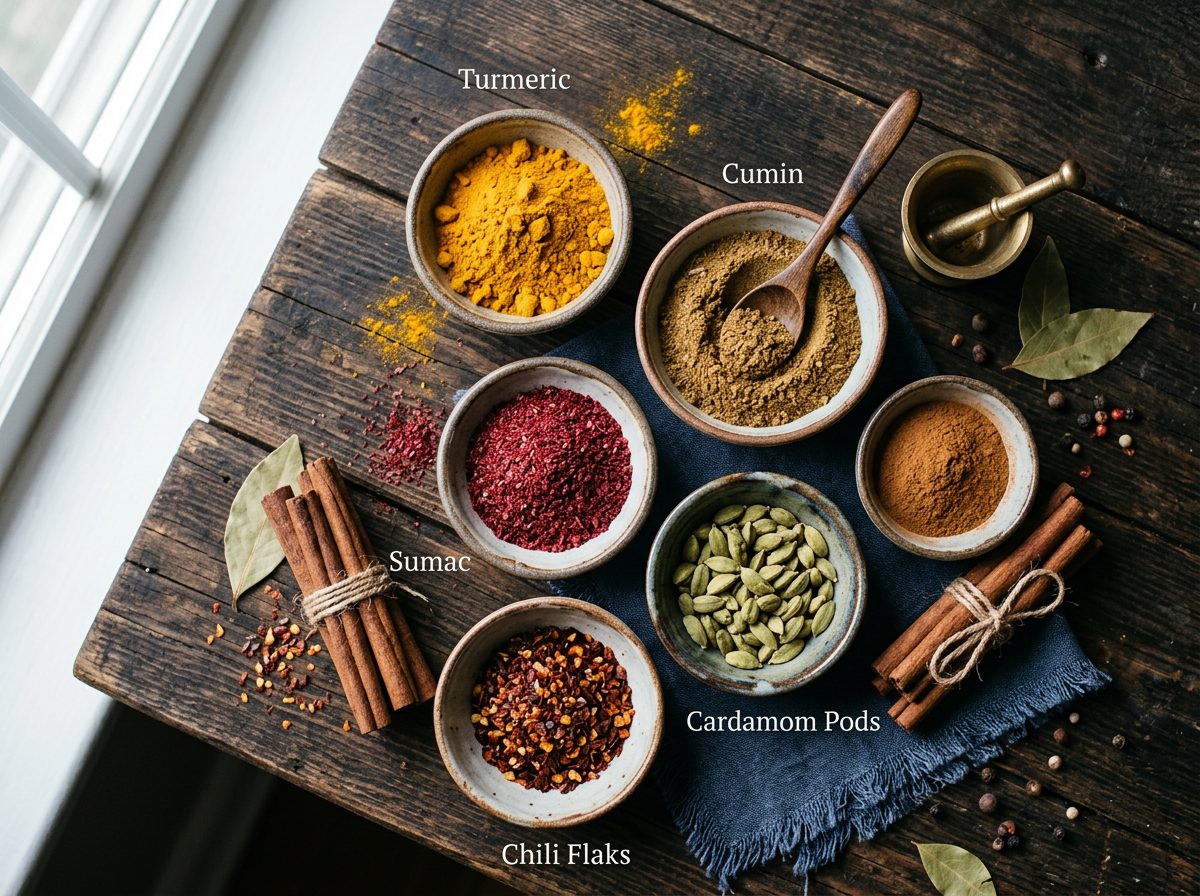
Cumin is one of the most widely used spices in Middle Eastern cooking. It is generously added to dishes like hummus, kofta, and mahshi (stuffed vegetables), imparting a warm, distinctly earthy aroma.
Sumac has a uniquely tangy, citrusy profile and is a staple of Levantine cuisine, frequently featured in fattoush salad, musakhan, and roasted sumac chicken.
Ground coriander is essential across Egyptian and Gulf dishes. It is often sautéed alongside cumin and garlic at the very start of cooking to build a fragrant flavor base.
Cardamom is a cornerstone of Khaleeji (Gulf) cuisine. It infuses traditional Arabic coffee, spiced tea, and iconic rice dishes like Kabsa and Mandi with an enchanting, aromatic warmth.
Baharat (Arabic mixed spice) is typically a balanced blend of cumin, coriander, turmeric, cinnamon, and black pepper. It is widely used in stews, tagines, stuffed dishes, and hearty soups. For the most vibrant flavor, buy whole spices and grind them fresh right before cooking.